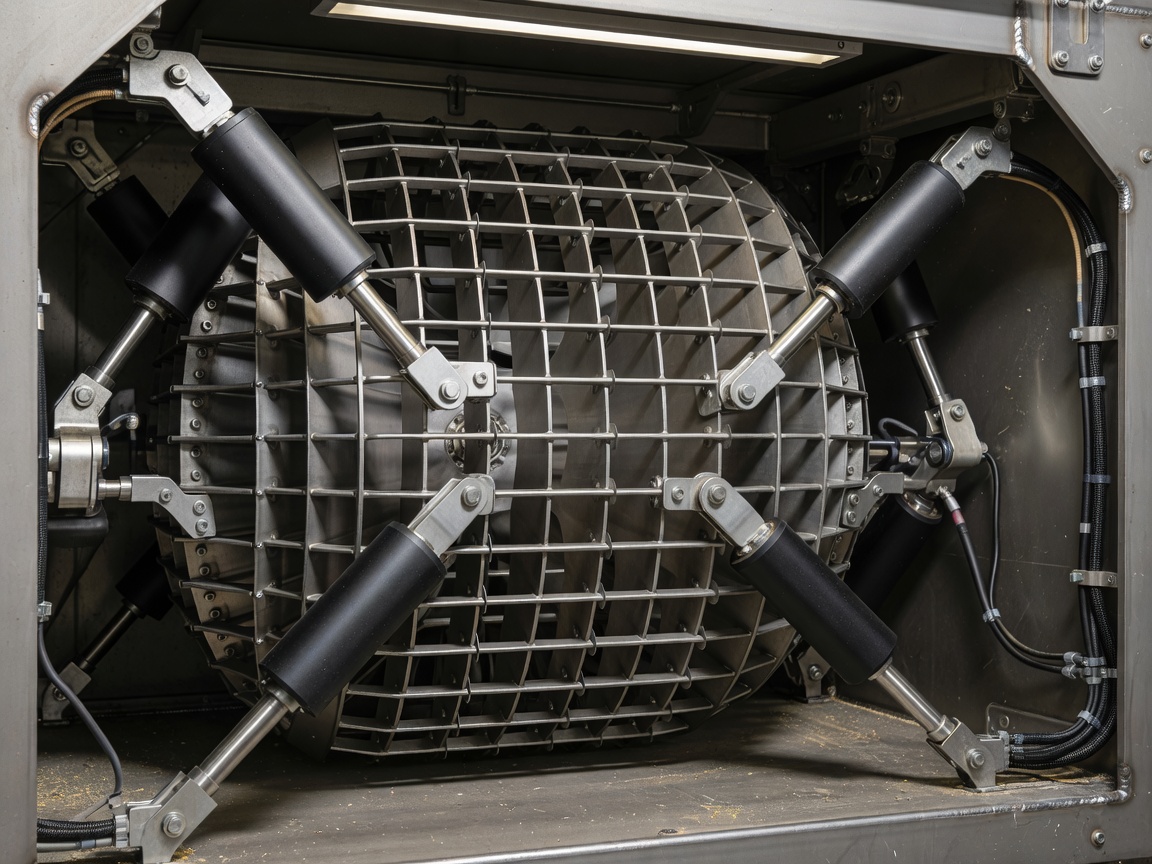
Threshing Rotor Innovations
Advancing grain separation dynamics, helical rasp bar geometries, and modular tungsten concave systems.
Helical Segmented Threshing Bars
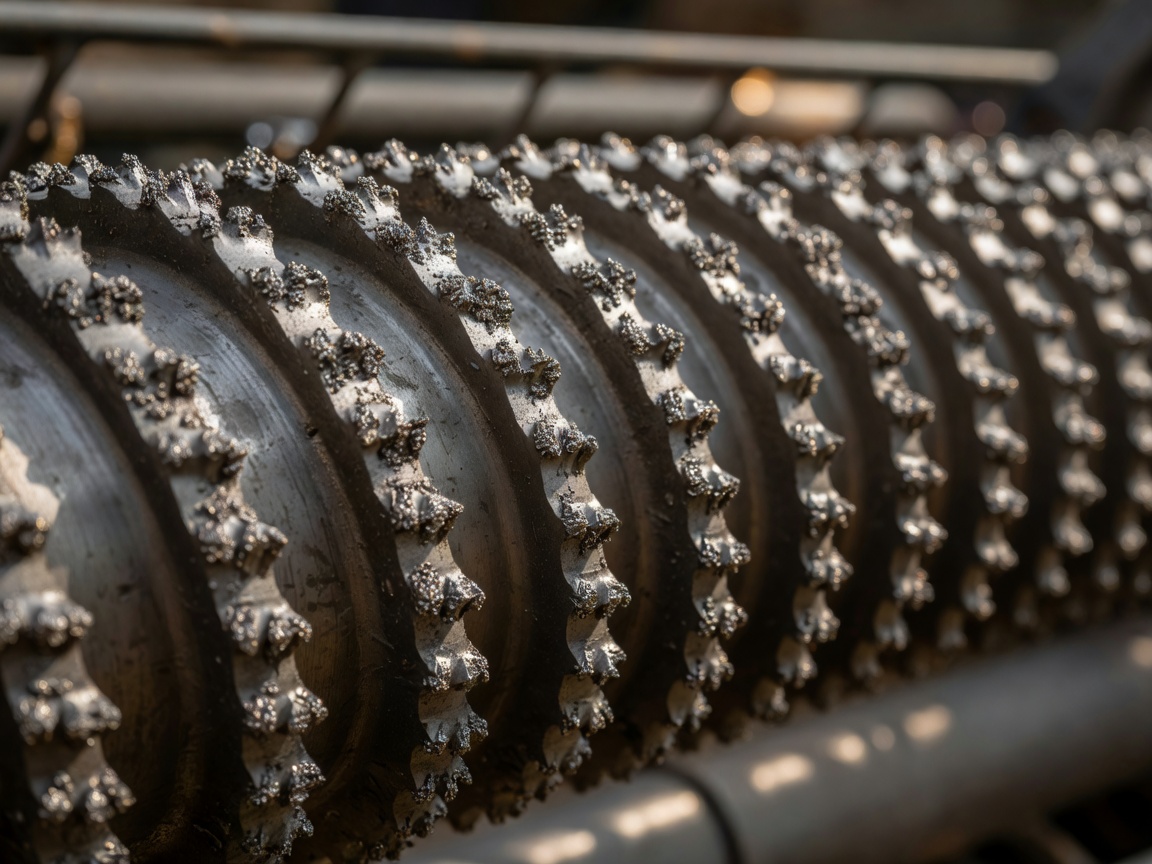
Traditional straight rasp bars impact the incoming straw mat abruptly, introducing high peak loads on rotor drive gearboxes and breaking straw into fine chaff that overloads the cleaning shoe. Helical rasp bars progressively draw crop through the concave basket in an uninterrupted spiral.
By spreading the threshing energy evenly along the rotor circumference, power requirements drop by up to 18%, preserving diesel fuel reserves during extended harvest shifts in heavy damp straw.
Adjustable Cage Vane Pitch
The speed at which the crop mat spirals from the threshing inlet to the straw discharge is dictated by the angle of internal cage vanes. Electric linear actuators controlled from the operator terminal alter the vane angle on the fly.
In high-yielding, easy-threshing wheat, vanes are advanced to accelerate crop egress, preventing over-separation. In damp canola or brittle soybeans, vanes are retarded to maximize separation time while concaves are opened wide.